Signs Your Transformer Oil Needs Filtration or Reconditioning: Complete Industrial Guide
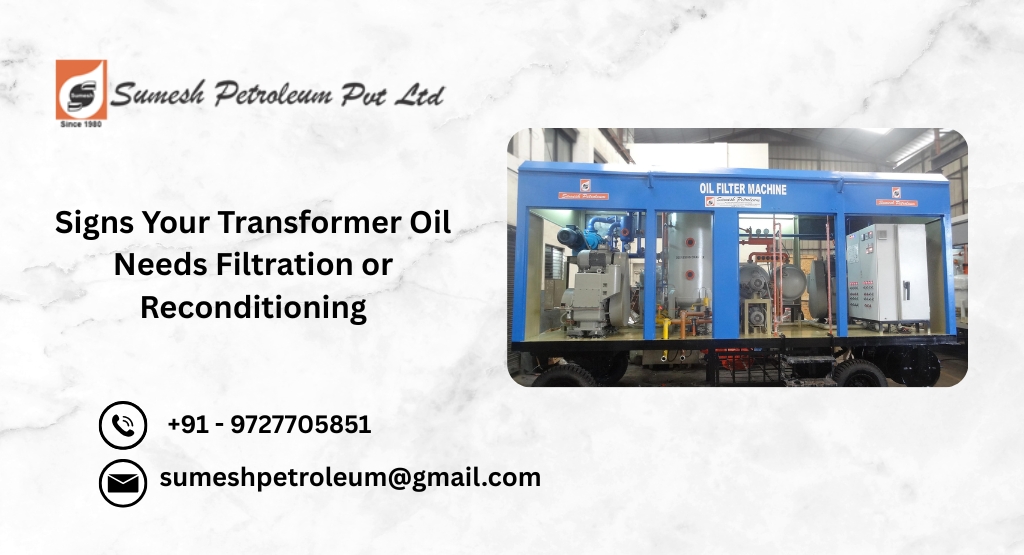
Power transformers are one of the most critical assets in industrial plants, substations, and power distribution systems. However, many transformer failures begin silently with poor oil condition. Ignoring early warning signs can lead to insulation breakdown, overheating, reduced efficiency, and costly downtime.
Understanding transformer oil filtration is essential for maintaining transformer reliability and extending equipment life. Moisture, sludge, carbon particles, oxidation, and dissolved gases gradually reduce oil performance and compromise insulation strength.
At Sumesh Petroleum Pvt Ltd, we work with industries, utilities, and transformer service providers across India to deliver advanced transformer oil filtration, dehydration, and reconditioning solutions designed for long-term operational reliability.
What Is Transformer Oil Filtration?
Transformer oil filtration is the process of removing moisture, gases, sludge, dirt particles, and contaminants from insulating oil to restore dielectric strength and improve transformer performance.
-
The process typically includes:
- Vacuum dehydration
- Degassing
- Fine particle filtration
- Heating and circulation
- Moisture removal
Filtration helps maintain insulation efficiency while reducing the risk of transformer failure during operation.
Why Transformer Oil Condition Matters
Transformer oil performs two critical functions:
-
Electrical insulation
-
Heat dissipation
When the oil becomes contaminated, both functions are affected. This can result in overheating, internal arcing, insulation damage, and reduced transformer lifespan.
Even high-quality transformers can fail prematurely if transformer oil contamination is ignored for extended periods.
What Are the Signs Your Transformer Oil Needs Filtration?
Low Breakdown Voltage (BDV)
One of the most common indicators is reduced BDV value. Moisture and contamination lower the insulating capacity of transformer oil.
If the BDV reading drops below recommended levels, immediate filtration is usually required to restore insulation performance.
In industrial environments, fluctuating load conditions and humid climates can accelerate oil deterioration faster than expected.
Increased Moisture Content
Moisture is one of the biggest enemies of transformer insulation systems. Water contamination may occur because of:
- Poor sealing
- Breather failure
- Condensation
- Aging insulation paper
High moisture levels reduce dielectric strength and increase the possibility of internal discharge.
A transformer operating with excess moisture may also experience overheating and insulation aging.
Dark or Cloudy Oil Appearance
Healthy transformer oil generally appears clear and bright. Dark, muddy, or cloudy oil often indicates oxidation, sludge formation, or carbon contamination.
This is one of the early transformer oil degradation symptoms that maintenance teams should never ignore.
If sludge accumulation continues, cooling efficiency decreases significantly, leading to temperature rise inside the transformer.
Rising Transformer Operating Temperature
Contaminated oil loses its heat transfer capability over time. When oil circulation becomes inefficient due to sludge or carbon deposits, transformer temperature begins to rise.
Higher operating temperatures accelerate insulation aging and increase the possibility of winding damage.
Oil filtration can help restore cooling efficiency and stabilize operating conditions.
Sludge Formation Inside the Transformer
Oxidation of transformer oil creates acidic compounds and sludge deposits. These deposits block oil circulation paths and reduce heat dissipation efficiency.
Sludge is commonly found in older transformers or systems operating under continuous heavy load.
Reconditioning becomes essential when sludge formation starts affecting transformer performance.
How Transformer Oil Contamination Happens
Air and Moisture Exposure
Transformers exposed to humid conditions or damaged breathers can absorb moisture directly from the atmosphere.
Even small amounts of water contamination can drastically affect dielectric strength.
Oxidation Due to Heat
Continuous high operating temperatures accelerate oxidation, resulting in sludge and acid formation.
Poor cooling systems and overloaded transformers often face this issue.
Metal and Carbon Particles
Wear inside transformer components may generate fine metallic particles and carbon residues.
These particles increase the risk of electrical discharge and insulation failure.
When Transformer Oil Needs Filtration Immediately
After Transformer Installation or Repair
Newly installed or repaired transformers often require oil filtration before commissioning to remove moisture and trapped gases.
This ensures proper insulation performance during startup.
After Long Shutdown Periods
Transformers kept idle for extended periods may absorb atmospheric moisture internally.
Filtration before energization helps prevent operational failures.
During High Load Operation
Industrial transformers operating under continuous heavy load may require periodic oil treatment to maintain cooling and dielectric properties.
This is especially important in steel plants, manufacturing facilities, power stations, and utility substations.
Filtration vs Reconditioning: What Is the Difference?
Transformer Oil Filtration
Filtration mainly removes:
- Moisture
- Gases
- Dust particles
- Carbon impurities
It restores dielectric strength and improves operational performance.
Transformer Oil Reconditioning
Reconditioning is a deeper treatment process used when oil suffers from severe oxidation or aging.
It may involve:
- Acid removal
- Sludge treatment
- Adsorbent processing
- Oil regeneration
Reconditioning helps recover oil properties and extend transformer service life.
Benefits of Timely Transformer Oil Filtration
Improved Transformer Reliability
Clean oil ensures stable insulation performance and reduces internal electrical faults.
Extended Equipment Life
Regular filtration slows insulation aging and protects transformer components from thermal stress.
Reduced Maintenance Costs
Preventive oil treatment minimizes major breakdown risks and lowers repair expenses.
Better Energy Efficiency
Properly conditioned oil improves cooling performance and overall transformer efficiency.
Common Mistakes Buyers and Maintenance Teams Should Avoid
Delaying Oil Testing
Many industries wait until transformer performance drops before testing oil condition. Regular oil analysis helps identify problems early.
Ignoring Moisture Levels
Even when transformers appear operational externally, internal moisture can silently damage insulation systems.
Using Inadequate Filtration Equipment
Low-capacity filtration systems may fail to remove dissolved gases and microscopic contaminants effectively.
Choosing professional filtration services with high-vacuum technology is important for industrial applications.
Why Industries Choose Sumesh Petroleum Pvt Ltd
Sumesh Petroleum Pvt Ltd provides advanced transformer oil filtration and reconditioning services for industrial and utility applications across India.
Our strengths include:
- High-vacuum oil filtration systems
- Reliable transformer oil dehydration technology
- Experienced technical support
- Customized filtration solutions
- Fast onsite service support
- Equipment rental and maintenance assistance
We support industries, substations, EPC contractors, and transformer service providers with dependable transformer oil treatment solutions designed for operational safety and long-term reliability.
Conclusion
Knowing when transformer oil needs filtration can prevent major transformer failures, costly shutdowns, and insulation damage. Warning signs such as low BDV, moisture contamination, sludge formation, rising temperature, and dark oil appearance should never be ignored.
Timely filtration and reconditioning help maintain transformer efficiency, improve insulation strength, and extend equipment life significantly.
If your transformer is showing signs of transformer oil contamination or other transformer oil degradation symptoms, consulting an experienced filtration specialist can help restore performance before critical damage occurs.
FAQs
How often should transformer oil be filtered?
Transformer oil filtration frequency depends on transformer load, operating conditions, and oil test results. Industrial transformers generally require periodic testing and filtration as part of preventive maintenance.
What happens if transformer oil is contaminated?
Contaminated transformer oil loses dielectric strength and cooling efficiency. This can lead to overheating, insulation failure, electrical discharge, and transformer breakdown.
Can transformer oil be reused after filtration?
Yes. Proper filtration and reconditioning can restore transformer oil quality and improve dielectric performance, making the oil suitable for continued industrial use.
What are the major transformer oil degradation symptoms?
Common symptoms include low BDV, dark oil color, sludge formation, high moisture content, overheating, and increased acidity levels.
Is transformer oil reconditioning different from filtration?
Yes. Filtration mainly removes moisture and particles, while reconditioning treats heavily aged oil by removing acids, sludge, and oxidation bys.
Need expert guidance for transformer oil filtration, dehydration, or reconditioning services?
Contact Sumesh Petroleum Pvt Ltd today to discuss your transformer maintenance requirements, request technical support, or get a customized quotation for industrial oil filtration solutions.

